01Winner
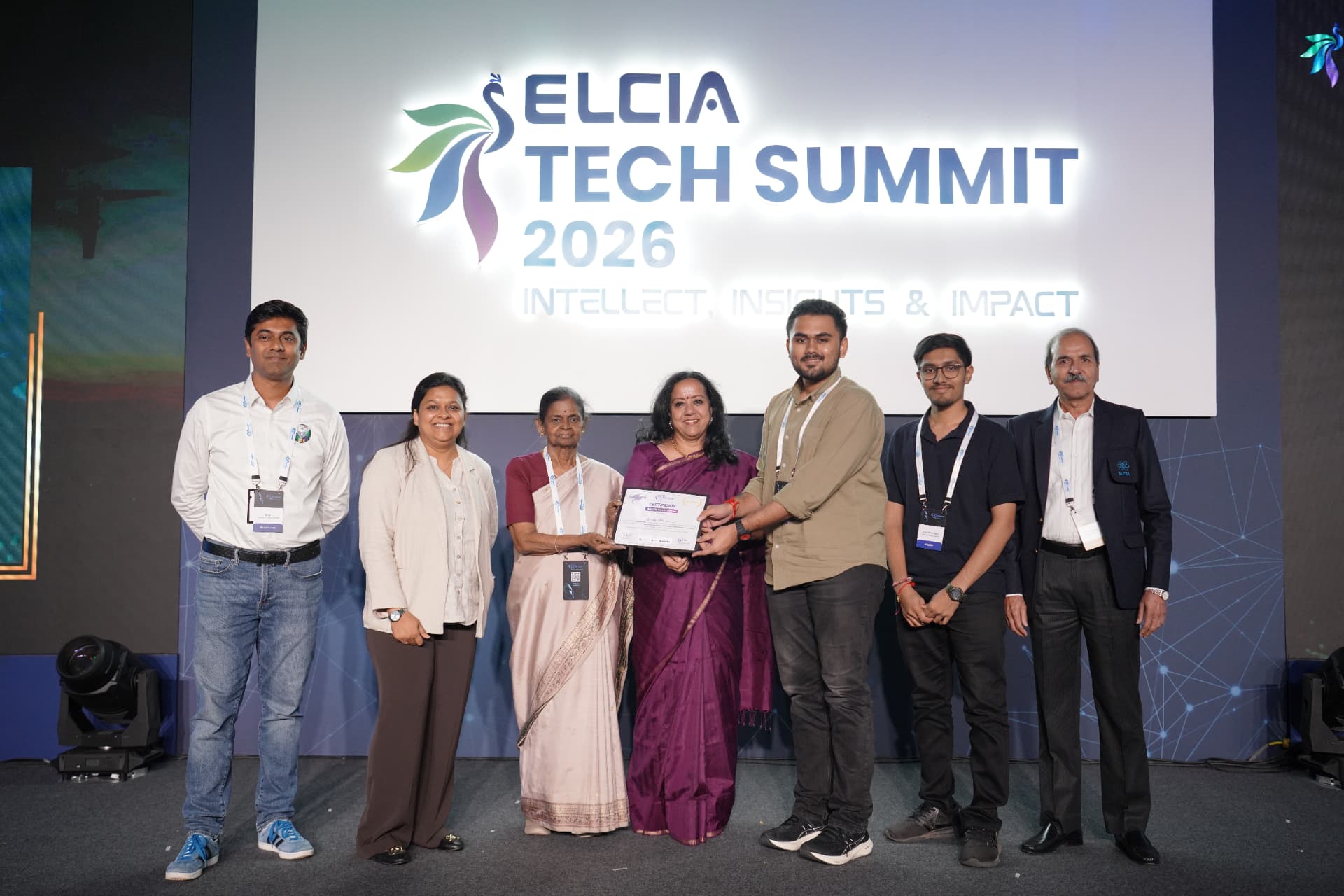
Winner
Drone404
Krishay Shah & Shah Tatva
GSFC University, Gujarat
Recognising the next generation of innovators.
The 2026 Drone & Edge-AI Challenge brought builders and problem-solvers together to create technology for safer, smarter cities.
Explore the WinnersIndia's smart cities need solutions that can identify problems early, support faster response and reduce pressure on civic teams. The ELCIA Smart City Drone-AI Challenge turned Electronics City into a real-world innovation context where students, researchers and young startups built AI models on sample drone and city video.
Teams worked on mobility incidents, monsoon and road risks, waste, public safety and emergency visibility. Shortlisted teams converted their ideas into working detection pipelines, dashboards, alerts, reproducible GitHub repositories and demonstration-ready prototypes.
Detect moving traffic, water, waste, smoke, crowd and infrastructure events before they become larger operational problems.
Use aerial and city video to complement fixed cameras, field inspection and citizen reports.
Attach severity, location, timestamp and visual proof to operator-ready alerts and response recommendations.
The strongest prototypes advanced toward controlled pilot consideration in Electronics City and similar urban campuses.
Teams built video-AI systems using ELCIA-provided sample traffic videos to detect queues, blockage, wrong-side movement and accident-related congestion, then classified severity and created location-aware response workflows.
Teams used road, drain and rainfall-condition videos to identify waterlogging, potholes, drainage overflow, damaged footpaths and surface risks, then built maintenance-priority dashboards with visual evidence.
Teams detected illegal dumping, waste overflow, smoke or fire, unsafe crowding and restricted-zone entry, then created evidence-backed alerts and response-tracking dashboards.
Celebrating the builders, problem-solvers and innovators who turned ideas into solutions.
Winner
Krishay Shah & Shah Tatva
GSFC University, Gujarat
Revealing results
Celebrating the teams who built, solved and pushed the boundaries of what technology can do.
From proposal to proof.
The Top 15 were selected for the strength of their ideas. The Top 5 earned their place by building, demonstrating and explaining working systems.
01
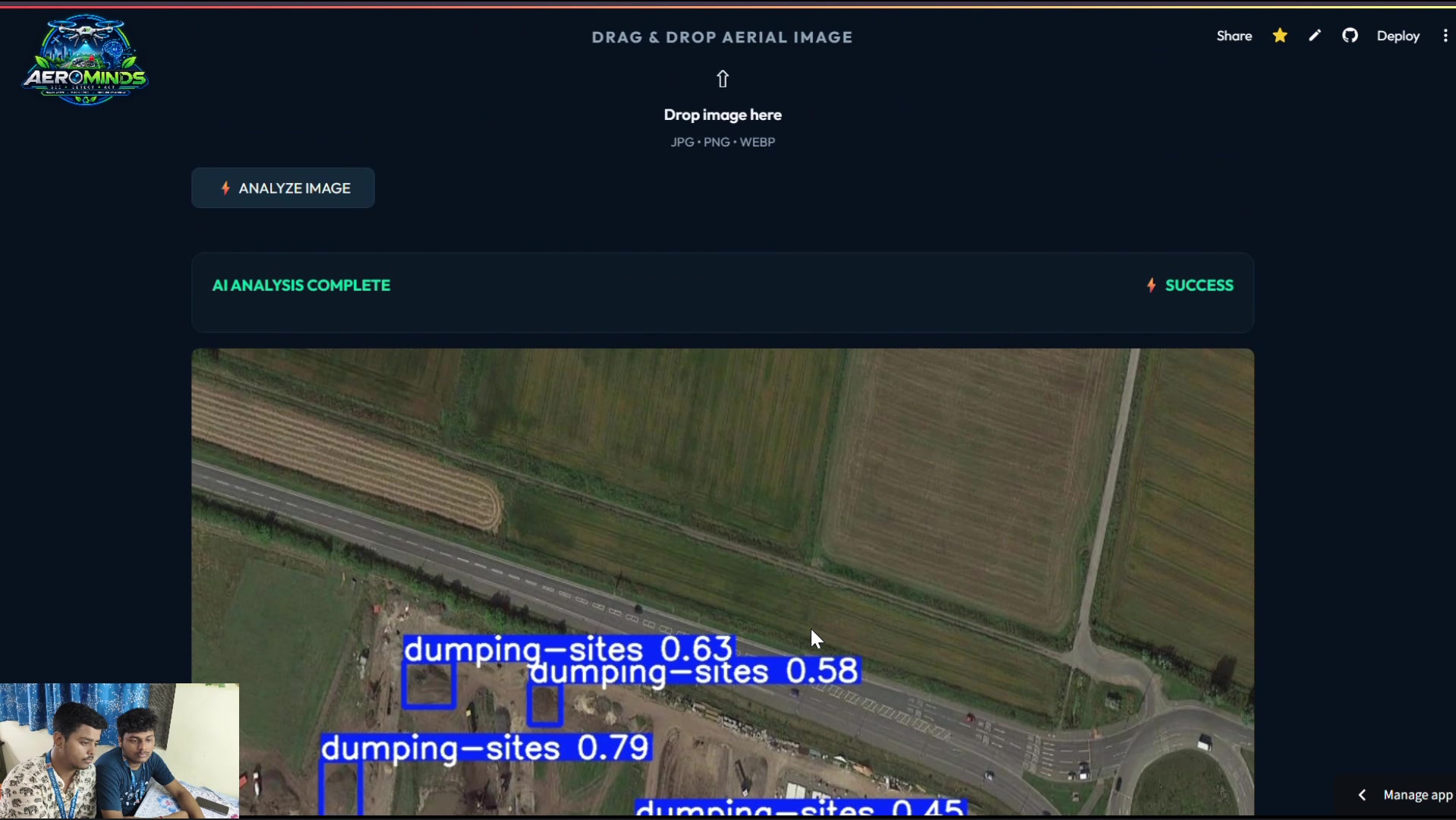
Drone-Based Waste & Illegal Dumping Intelligence
What they proved
Turned aerial imagery and video into a complete operational flow: AI detection → waste event identification → severity → recommended civic action → evidence → operator status update. The demonstration stood out for combining working AI with a clear, usable sanitation-response workflow.
Sikkim Manipal Institute of Technology · Sikkim
02
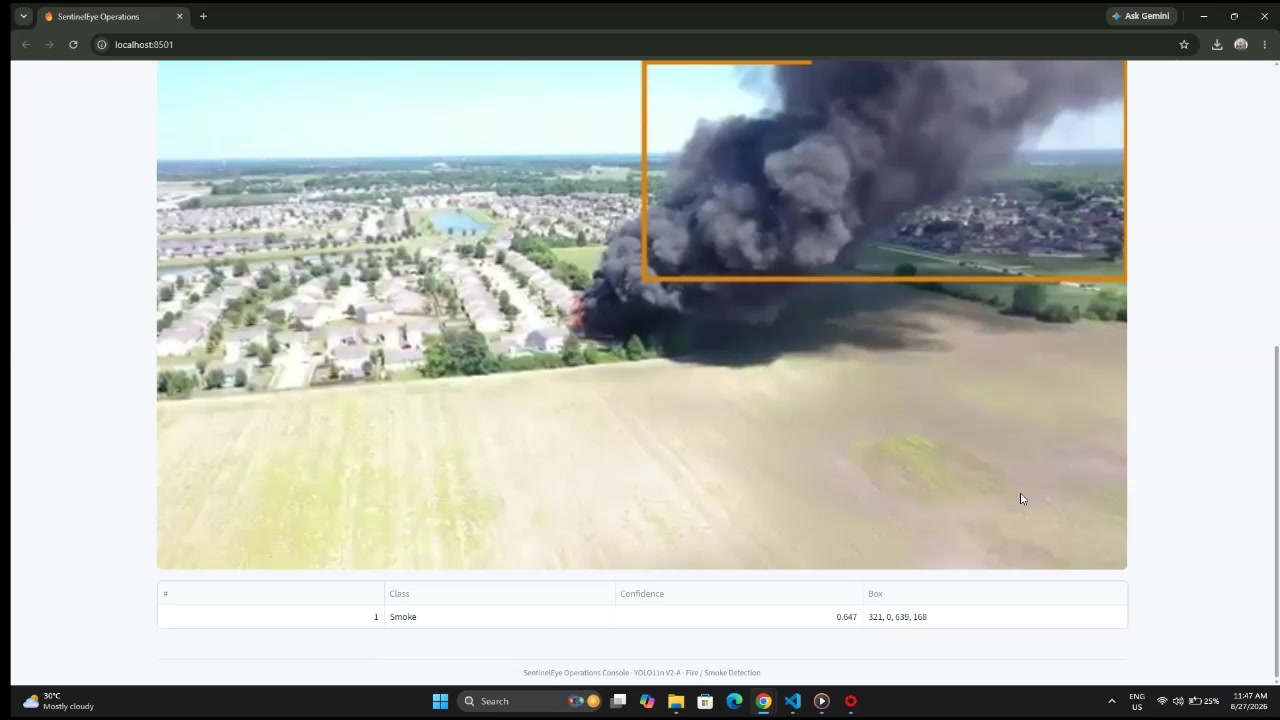
SentinelEye — Fire & Smoke Intelligence
What they proved
Demonstrated a technically rigorous fire-and-smoke detection system across images and video, backed by model evaluation, precision/recall evidence, negative testing and visible failure cases. The team stood out for showing not only successful detections, but also where the AI can fail.
Bihar Engineering University, Patna · Bihar
03
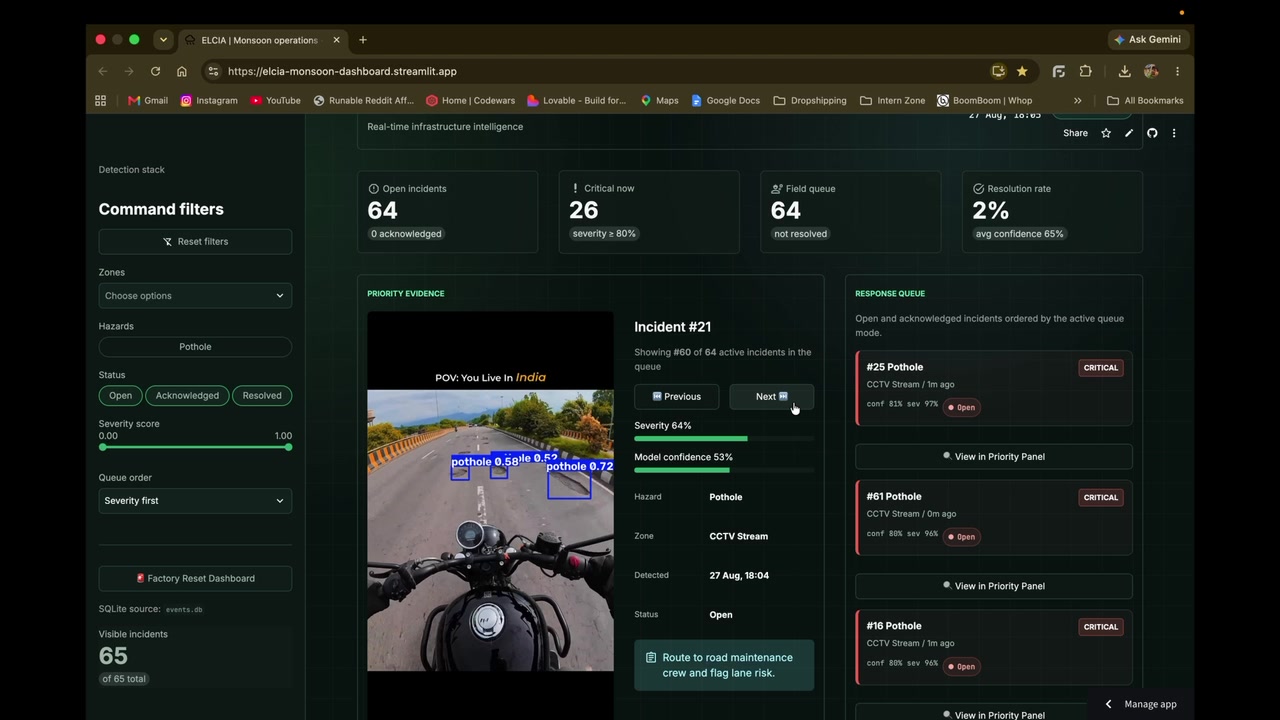
AI-Powered Monsoon Road Hazard Intelligence
What they proved
Presented the full engineering journey from dataset and model training → validation metrics → video inference → pothole/waterlogging detections → dashboard incidents → maintenance priorities. The technical presentation made the model development and resulting civic workflow especially easy to understand.
Scaler School of Technology · Karnataka
04
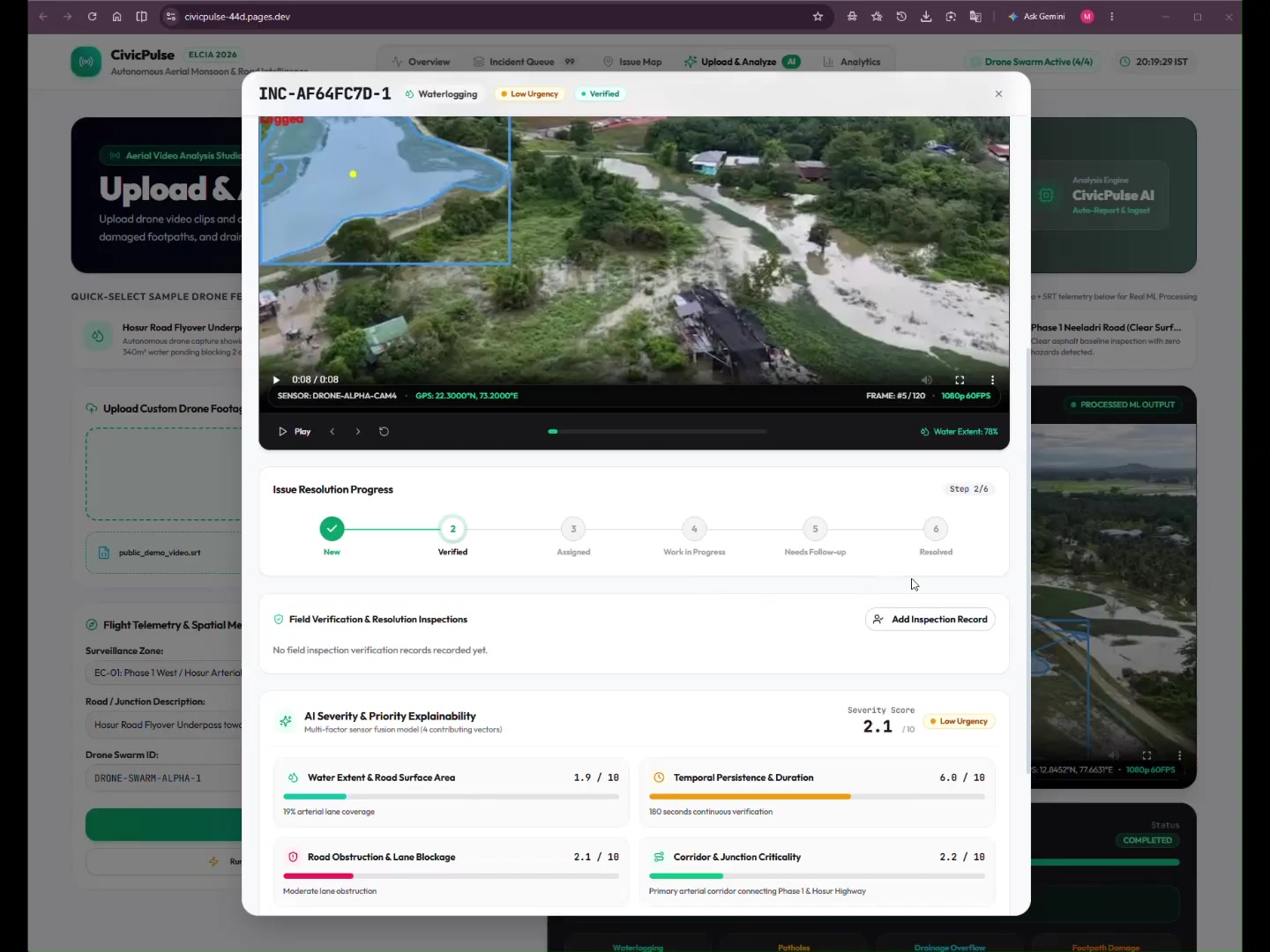
AI-Assisted Monsoon Civic Risk Intelligence
What they proved
Built one of the most complete civic-response demonstrations: video upload → AI processing → incident creation → visual evidence → human verification → assignment → status tracking. It showed clearly how AI output can move into an actual municipal operating workflow.
GSFC University · Gujarat
05
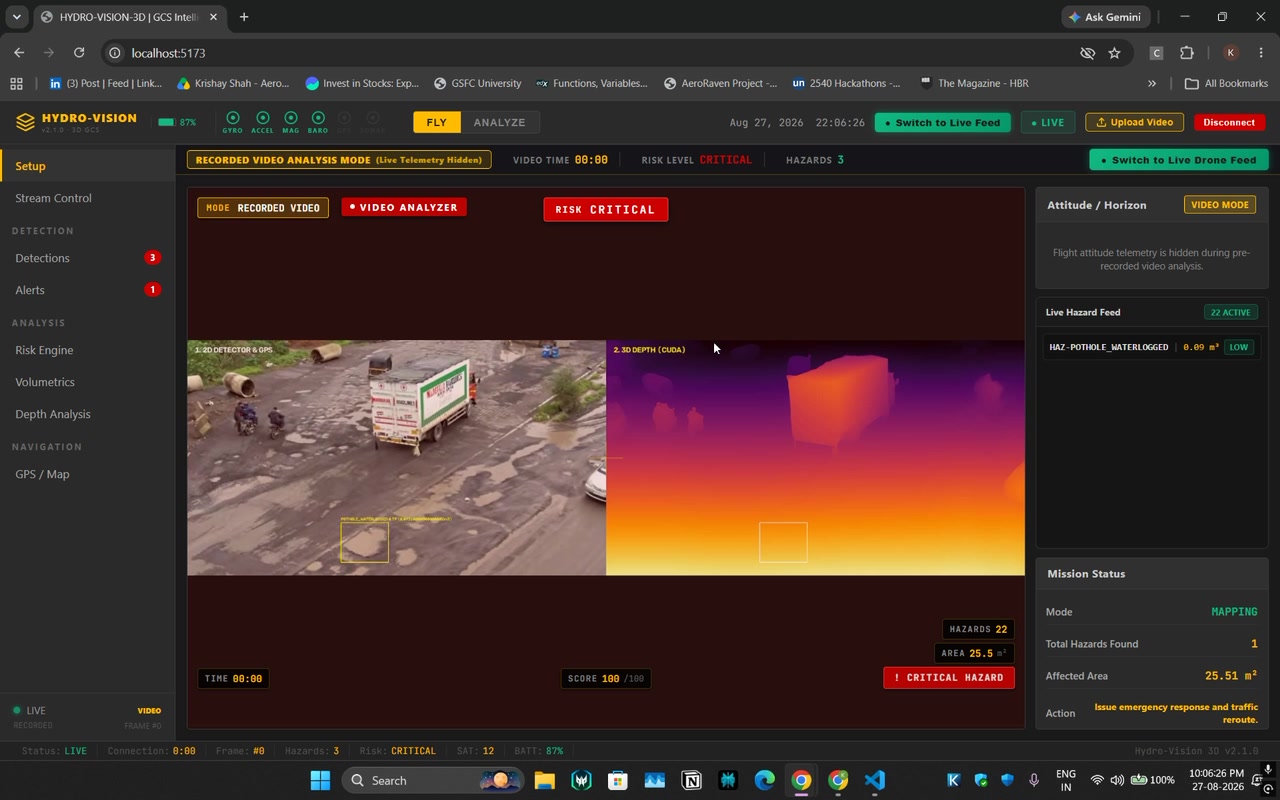
HYDRO-VISION-3D — Spatial Infrastructure Intelligence
What they proved
Demonstrated an ambitious integrated system combining AI hazard detection, depth visualization, spatial analysis, GIS mapping, risk analytics and maintenance workflow in a unified ground-control interface.
GSFC University · Gujarat
These five teams advanced from controlled online demonstrations to the final technical defence, jury Q&A and physical demonstrations held on 9 September 2026.
Final recognition took place at
ELCIA TECH SUMMIT 2026
10 September 2026
Final demonstrations · 9 September 2026
Meet the teams that made it to the Top 5 of the ELCIA Smart City Drone-AI Challenge 2026, and discover the people and ideas behind their solutions.
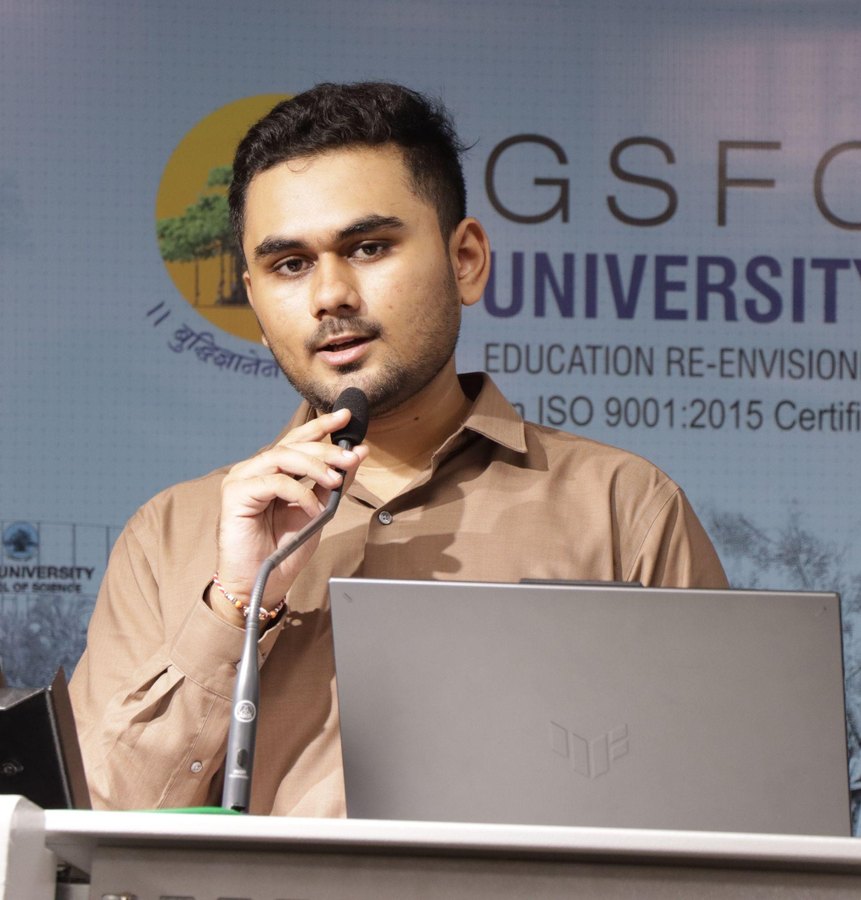
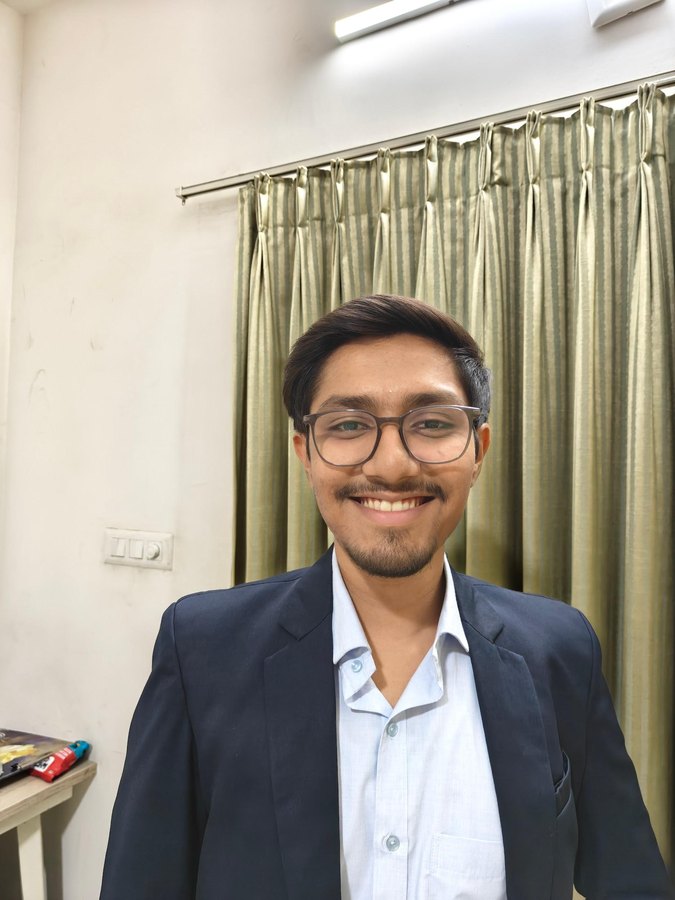
HYDRO-VISION-3D
Krishay Shah · Tatva Shah
GSFC University


AI-Assisted Monsoon Civic Risk Intelligence
Chawda Manthan Prashantkumar · A Manav Prasath
GSFC University


Drone-Based Waste & Illegal Dumping Intelligence
Roushan Srivastava · Sayak Satpathi
Sikkim Manipal Institute of Technology

SentinelEye
Avinash Goyal
Bihar Engineering University, Patna


VarunDuth
Arkajyoti Mondal · Preetam Roy
Scaler School of Technology

Rage Layasree
Srinivasa Ramanujan Institute of Technology
A heartfelt thank you to the experts who brought their time, experience and perspectives to the evaluation of the next generation of technology solutions.
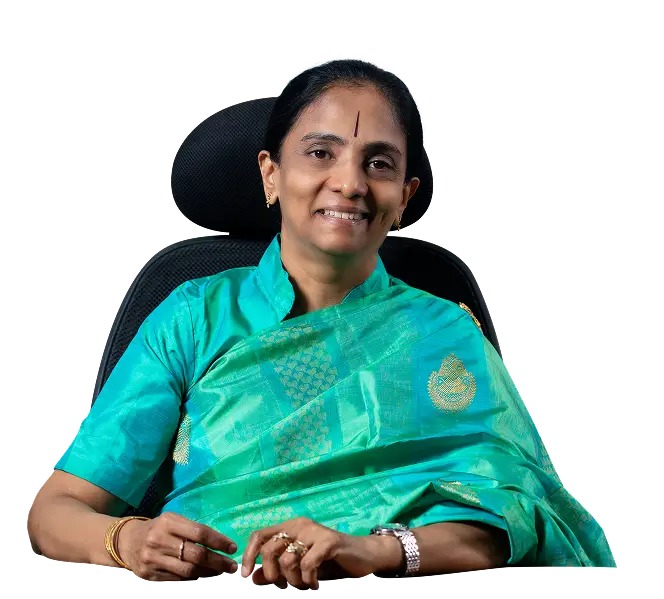

A heartfelt thank you to Dr. N. Nagamani Nagaraja and Dr. Prakruthi Hareesh for serving as the jury for the ELCIA Smart City Drone-AI Challenge 2026.
Your expertise, questions, perspectives and time helped challenge the teams to think deeper, build better and turn ideas into meaningful solutions.
Thank you for being an important part of the journey.
Two-member teams submitted their challenge entries.
Teams attended the inauguration call and reviewed themes, datasets, rubric and proposal template.
Teams submitted a concise 1–2 page plan covering the AI approach, dashboard and testing workflow.
Top 15 teams developed the AI pipeline, dashboard, alerts and reproducible GitHub evidence online.
Teams demonstrated online; the Top 5 advanced to integration and the physical final.
The Top 5 presented on 9 September and received recognition at ELCIA Tech Summit on 10 September.
The outputs shortlisted teams presented for review and demonstration.
Students, researchers and startups not more than two years old took part.
Each participating team had exactly two members.
Both participants provided valid, regularly monitored email addresses.
Teams participated from Indian States and Union Territories.
The online build used sample video inputs; owning a drone was not required for the online build stage.
Shortlisted teams received detailed build and submission instructions.
25 Jul – 08 Aug 2026
Two-member teams submitted their entries between 25 July and 8 August 2026, selecting from the published themes and challenge details.
9 Aug 2026
Challenge structure, datasets, goals and proposal template released.
9 – 11 Aug 2026
1–2 page plan: theme, AI approach, dashboard, workflow and testing.
12 – 14 Aug 2026
Top 15 selected for the online technical build.
15 – 27 Aug 2026
AI pipeline, dashboard, alerts, GitHub documentation and demo evidence.
28 Aug – 2 Sep 2026
Working solution presentation and Top 5 selection.
7 – 8 Sep 2026
Final inputs, dashboard, alerts, workflow and optional controlled aerial-video validation.
9 Sep 2026
Top 5 live demos, jury Q&A and final scoring.
10 Sep 2026
Winner announcement and pilot-worthy solution shortlist.
Clear user, location, incident and response workflow.
Appropriate approach, meaningful results, severity logic and testing evidence.
Readable evidence, event status, ownership and recommended response.
Working pipeline, sound engineering choices and clear limitations.
Usable repository, setup instructions, outputs and demo evidence.
Clear explanation, credible validation and practical next steps.
₹50,000
Team prize
₹35,000
Team prize
₹25,000
Team prize
The Top 5 teams presented at the physical final, with pilot-worthy solutions considered for controlled pilot discussions.
Students, researchers and startups that are not more than two years old participated from across India.
Each selected team had exactly two participants.
No. Proposals and the online build were based on sample video inputs. Controlled drone or aerial-video inputs were available for finalist integration, subject to organiser arrangements.
A video-AI detection pipeline, dashboard, evidence-backed alert logic, reproducible GitHub repository and demonstration video for one of the three themes.
Proposals were evaluated and the Top 15 teams were invited to the online technical build challenge.
The Top 5 teams selected after online review were invited to the physical demonstration on 9 September 2026.
Final recognition took place at ELCIA Tech Summit on 10 September 2026.
Yes. Team members could represent different institutions or States and Union Territories.
Final venue details were published on the website and emailed to shortlisted teams.




Recognising the next generation of builders, problem-solvers and innovators.
View the Winners